7 min read
LabLink
Connecting students with research opportunities through targeted workflows and tailored matching.
My Role
Product Designer
Team
3 Product Designers
Tools
Figma (+ Figjam)
Miro
Google Forms
Project Detail
Group Project
Winter 2024)
Problem
Students lack a centralized platform to securely find research opportunities.
Students struggle to find research opportunities due to scattered listings and unresponsive faculty, while professors are overwhelmed by unstructured emails and lack a clear way to evaluate applicants. This disconnect leads to poor communication, mismatched expectations, and missed opportunities on both sides.
Solution
A centralized platform that allows for communication between student and research labs.
LabLink aims to be a centralized platform connecting students with research opportunities through targeted workflows and intelligent matching. Our solution addresses three key pain points:
1 / Scattered + opaque resources
We created a comprehensive hub for all university research opportunities
2 / Unclear expectations + qualifications
Standardized listings clearly communicate requirements and lab culture
3 / Lack of transparency + feedback
Built in application tracking keeps students informed throughout the process
Successfully developed a validated product concept with 100% positive user feedback
Outcome
Our user research revealed that 96.2% of students found the current research application process difficult to navigate, and 100% of respondents said they would use LabLink if available.
What Did I Do?
🔍UX Research
• Conducted interviews + user testing with students to identify key pain points
• Created + analyzed a survey with 50+ respondents in order to validate market demand
• Developed user personas + journey maps to understand the research application experience
• Affinity mapping to organize insights and identify patterns
🎨UX Design
• Designed a comprehensive platform from concept to high-fidelity mockups
• Created standardized application templates to streamline the process for both students and faculty
💼Business Strategy
• Conducted competitive analysis of existing platforms (UROP, Handshake, etc)
• Created a lean business canvas to define value proposition and revenue model
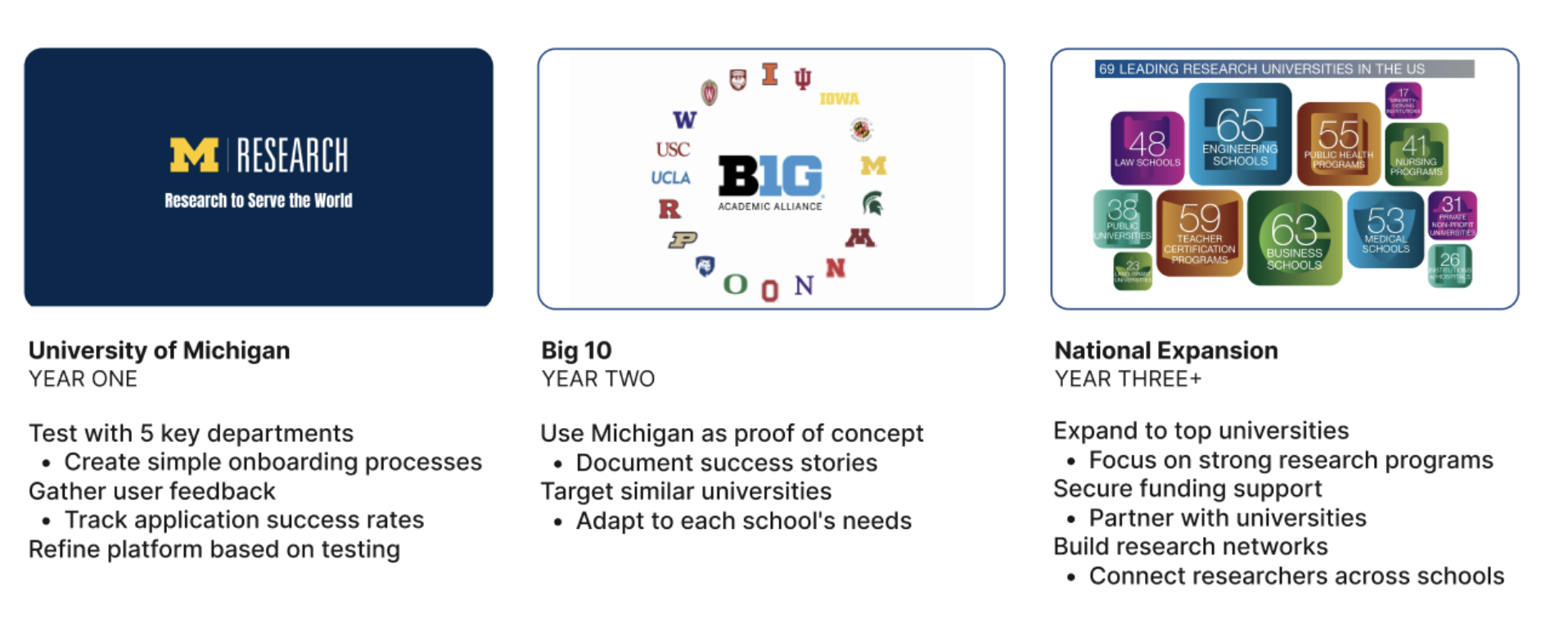
• Developed a 3-year growth strategy, starting with the University of Michigan > expanding to Big Ten schools > expanding nationally
• Identified key metrics for measuring platform success and user engagement
Starting out with research..
1 / Competitive Audit
2 / User Testing + Interviews + Surveys
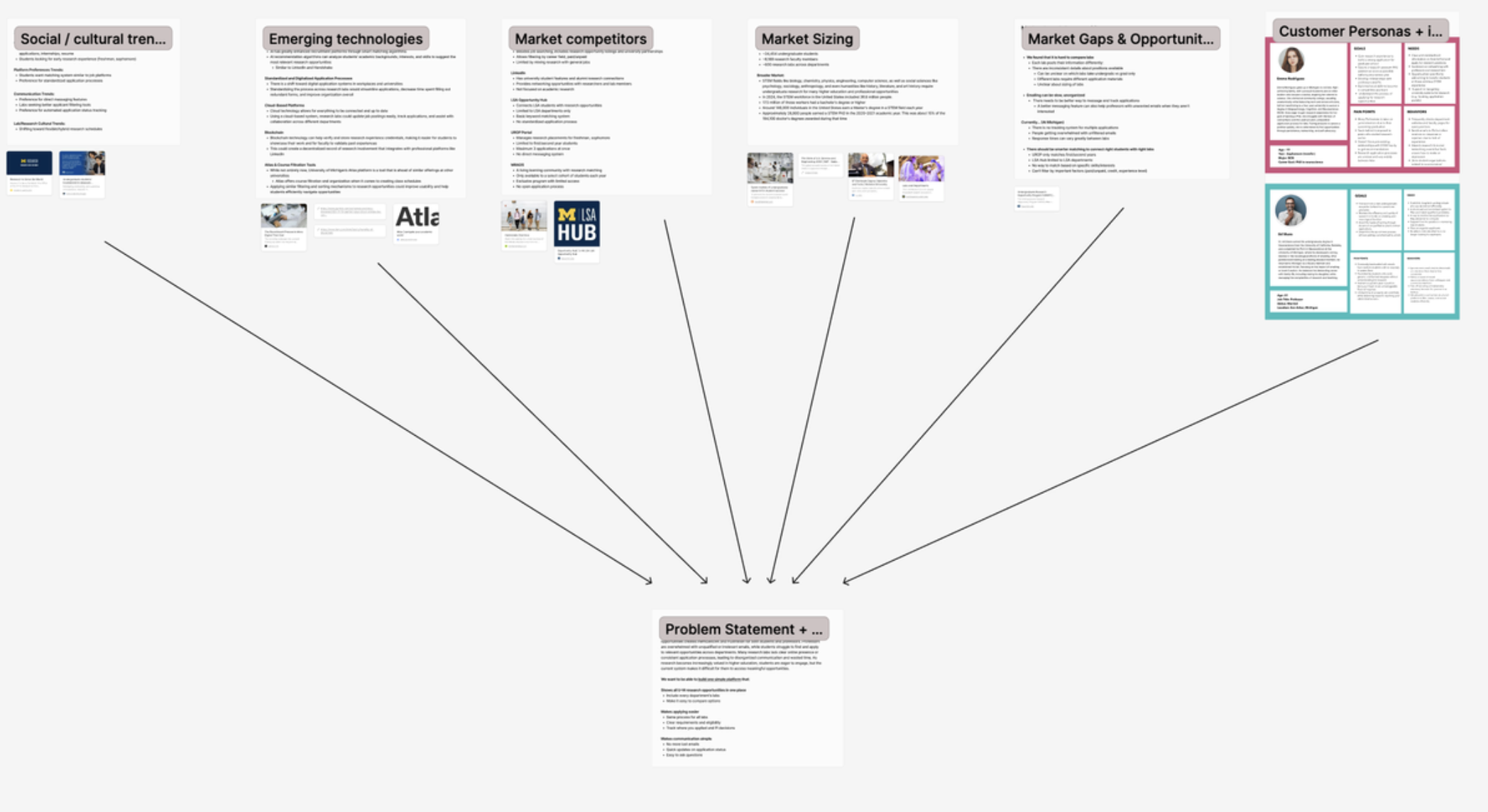
I conducted a competitive audit of different platforms in the academic research/university ecosystem, including UROP, Handshake, department websites, and LinkedIn. I also expanded my research to examine emerging technologies and AI matching algorithms that could enhance research opportunity platforms. Following this, I sent out surveys, conducted interviews, and analyzed existing research data better to understand the challenges in the research application process.
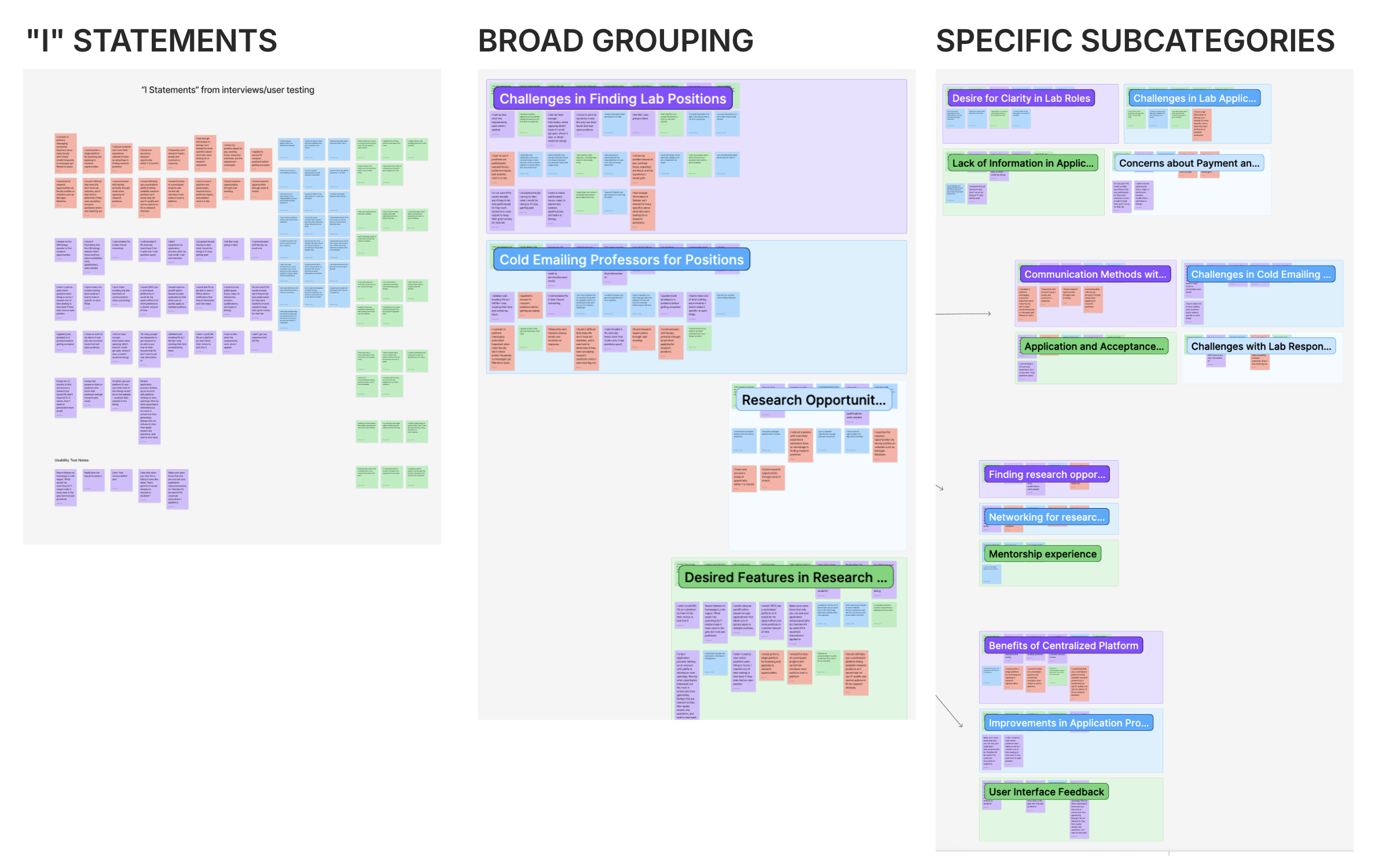
80.8% of students applied through cold emailing and direct professor outreach
88.5% reported their biggest challenge was getting any response from faculty
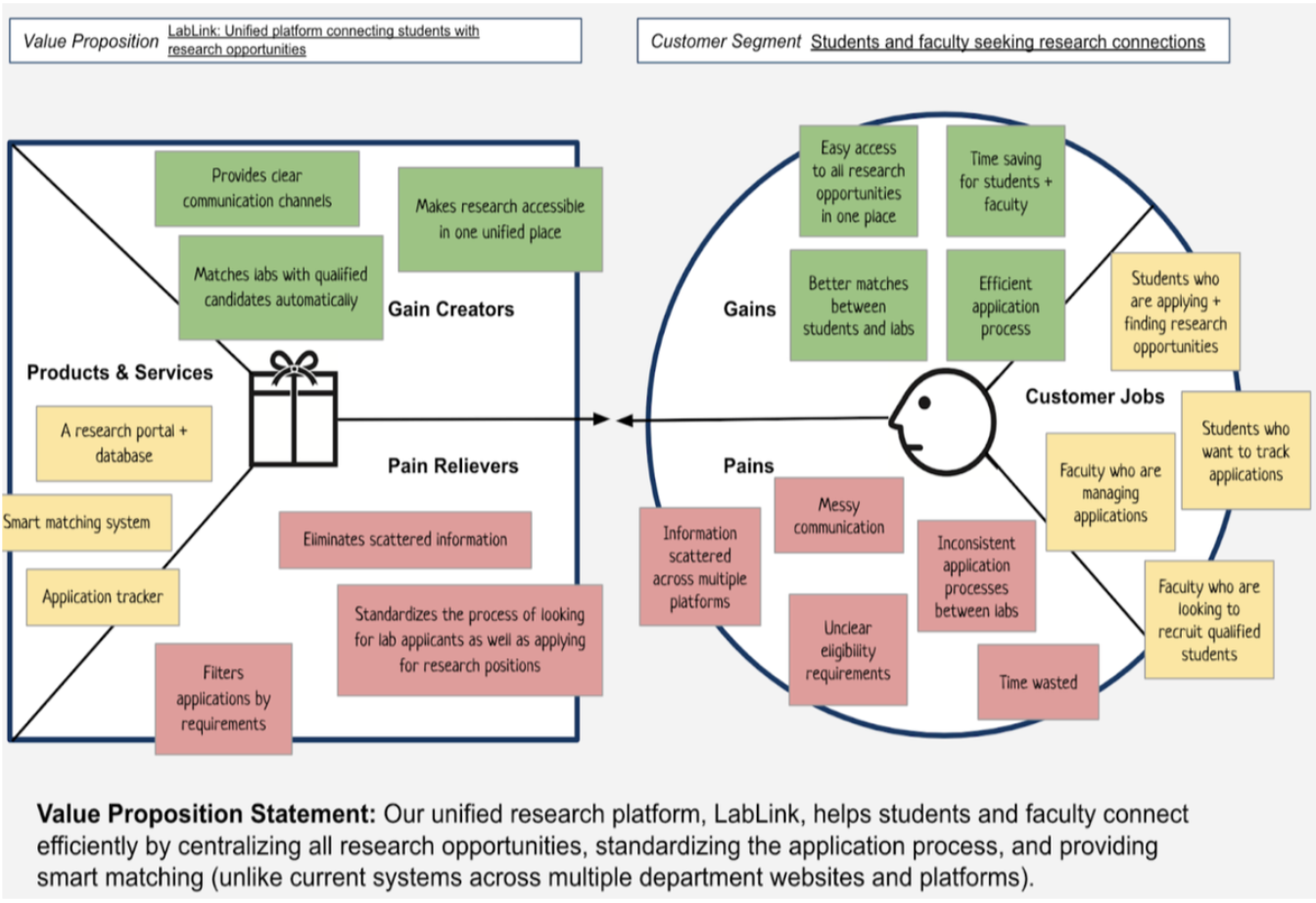
Business Model / Value Proposition
LabLink is a unified platform connecting students with research opportunities through targeted workflows and intelligent matching.
For Students
• One centralized platform for discovering and applying to relevant research positions across all university departments
For Faculty
• Streamlined application management that reduces email overload and helps find qualified candidates
For Universities
• Enhanced research participation rates and improved matching between labs and student talent
Business Model / Monetization Strategy
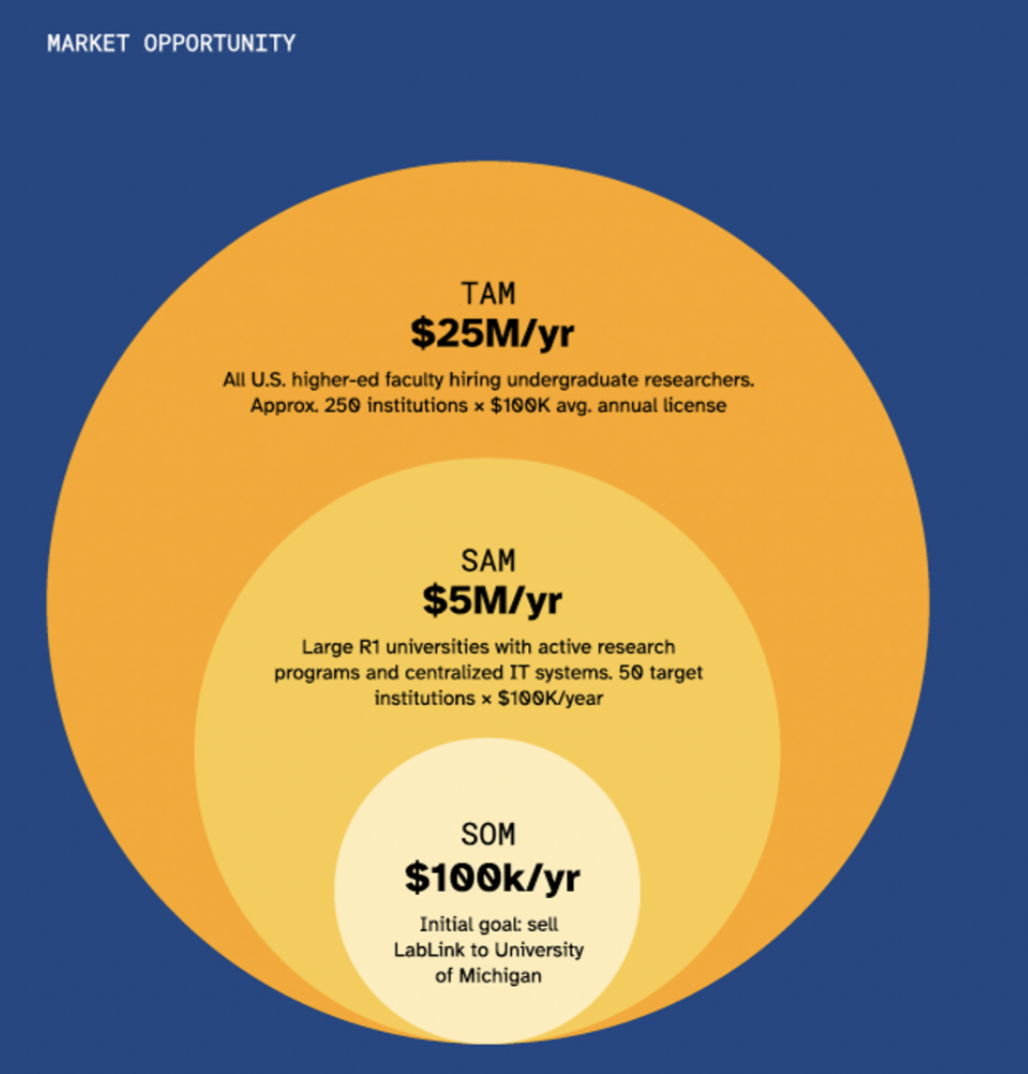
Built on university licensing with tiered features:
Core University License ($100,000/year)
Complete platform access with university branding
Integration with existing university login systems
Unlimited research listings and applications
Basic analytics and reporting
Premium Features (additional ~$20,000/year)
Advanced analytics on research engagement metrics
API integration with other university systems
Custom application workflows
Priority support and training
Business Model / Market Strategy
TAM / SAM / SOM
UROP programs are limited to 1st-2nd year students with no live application tracking
Handshake lacks research specific workflows and matching
Department websites offer disconnected and outdated information with inconsistent application formats
LinkedIn is too broad and not tailored to academic research matching
LabLink addresses critical gaps in existing solutions:
Business Model / Competitive Advantage
Design Process
My design process was guided by three core principles.
1 / Simplicity over complexity
Minimizing steps required to find and apply for research
2 / Transparency throughout
Clear status indicators and feedback at every stage
3 / Equal value to both sides
Balancing student and faculty needs within the platform
I wanted a design that creates a seamless experience, helping students find research positions that match their interests and skills, while also giving professors an organized way to find qualified assistants.
Prototype Demo / User Flow Overview
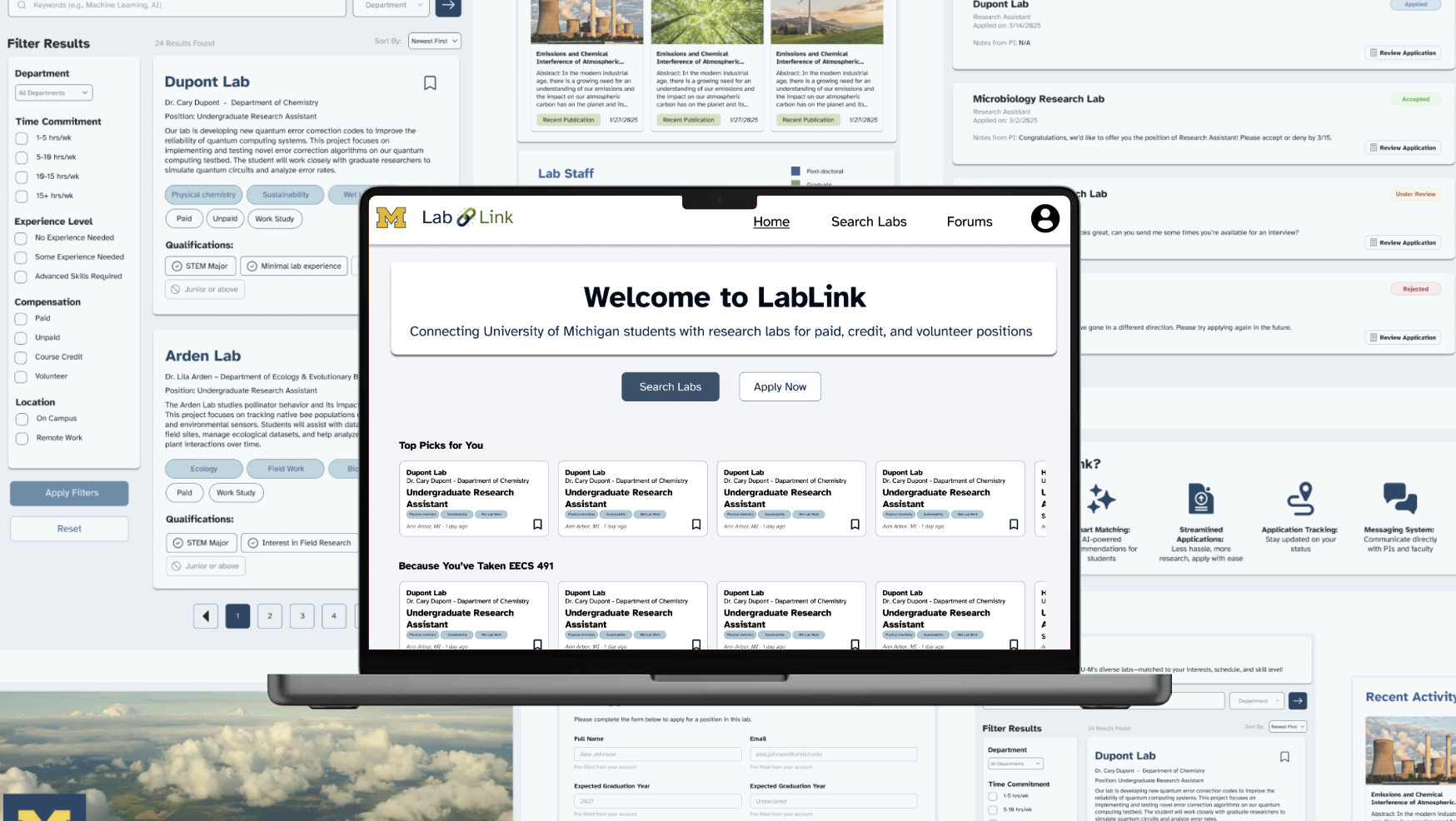
The prototype demonstrates a seamless user journey, from landing on the homepage to submitting a lab application. Users are able to:
Discover featured research opportunities
Explore labs and professor profiles
Apply through a clear, consistent form
Track progress with a real time dashboard
This flow was designed to solve common pain points: scattered resources, unclear expectations, and lack of transparency.
1 / Core Platform Pages
Homepage with featured research roles
Search Results with filters to find the right lab
Lab & Professor Profiles with detailed info
Application Forms that are simple and consistent
Dashboard to track application status
2 / Key Features
Familiar University of Michigan branding
Simple, intuitive navigation
Clear lab requirements
Real-time status updates
Direct messaging between students and faculty
3 / Testing + Improvements
Tested with real users and made improvements based on their feedback:
Simplified profile layout for easier navigation
Added testimonials from past lab assistants to build trust
Clearer status indicators to reduce confusion
Improved search filters for more accurate results
Next Steps
I’ve identified three phases for implementation