
5 min read
NomNow
A mobile app that reduces food waste and builds community by connecting users through meal sharing with convenient scheduling and pickup options.
My Role
Team Leader, UX Designer, UX Researcher
Tools
Figma (+ Figjam)
Miro
Project Detail
Solo course project
9 weeks (Winter 2024)
Hi. I'm a current college student who wanted to build a mobile app that makes it easy for users to share meals.
Problem
Students are tired of cooking for one and wasting food, while lacking natural ways to connect with their neighbors.
College students face two major challenges: cooking too much food for one person leading to waste, and wanting to connect with others but having no natural way to do so. Many students are new to cooking or don't know how to cook at all, making them more likely to want to buy rather than sell home cooked meals. The current food landscape offers expensive delivery options or dining halls, but no way to access affordable, home cooked meals from people in their own building or campus community.
Solution
A “neighborhood” food sharing platform that prioritizes safety, convenience, and community building.
NomNow connects users, specifically college students, within apartment buildings and campus communities to share home cooked meals. Users can post excess food they've made or browse available meals nearby from their neighbors. The app emphasizes pickup over delivery (as preferred by users), location based discovery, and comprehensive safety features including user verification, ratings, and detailed ingredient lists for dietary restrictions and allergies.
Key Features:
Meal posting with photos, ingredients, and pickup scheduling
Location based browsing prioritizing proximity
Safety verification through user profiles and rating
Group functionality for building based communities or user groups
Outcome
100% task completion rates across all user testing scenarios with validated safety and convenience preferences.
User research confirmed that students successfully navigated all core app functions including meal discovery, posting, and pickup coordination. Testing validated my key assumptions: users strongly preferred pickup over delivery, safety was the primary concern when sharing food with strangers, and location proximity was more important than price when selecting meals. The solution effectively addresses both food waste reduction and community building while meeting users' safety and convenience requirements.
Research
Mixed research methods with 8 college students across 3 universities to understand food sharing behaviors / concerns.
I conducted comprehensive user research using three methodologies:
Flow Analysis (3 students): Mapped the complete food sharing process from cooking excess food to neighbor pickup, identifying key decision points and potential friction areas.
Cognitive Task Analysis (3 students): Deep dive into user decision-making, safety concerns, and mental models around food sharing, packaging, and trust-building.
Scenarios Testing (3 students): Tested different food sharing situations to understand user preferences for dine-in vs. pickup, payment systems, and social interactions.
Key Research Insights:
Food safety concerns were the #1 barrier to sharing with strangers
Users overwhelmingly preferred pickup rather than delivery or dine-in options
Location proximity (within 1 mile) was prioritized over other factors
Ingredient transparency for allergies was essential for trust
Most users wanted to buy rather than sell due to limited cooking skills
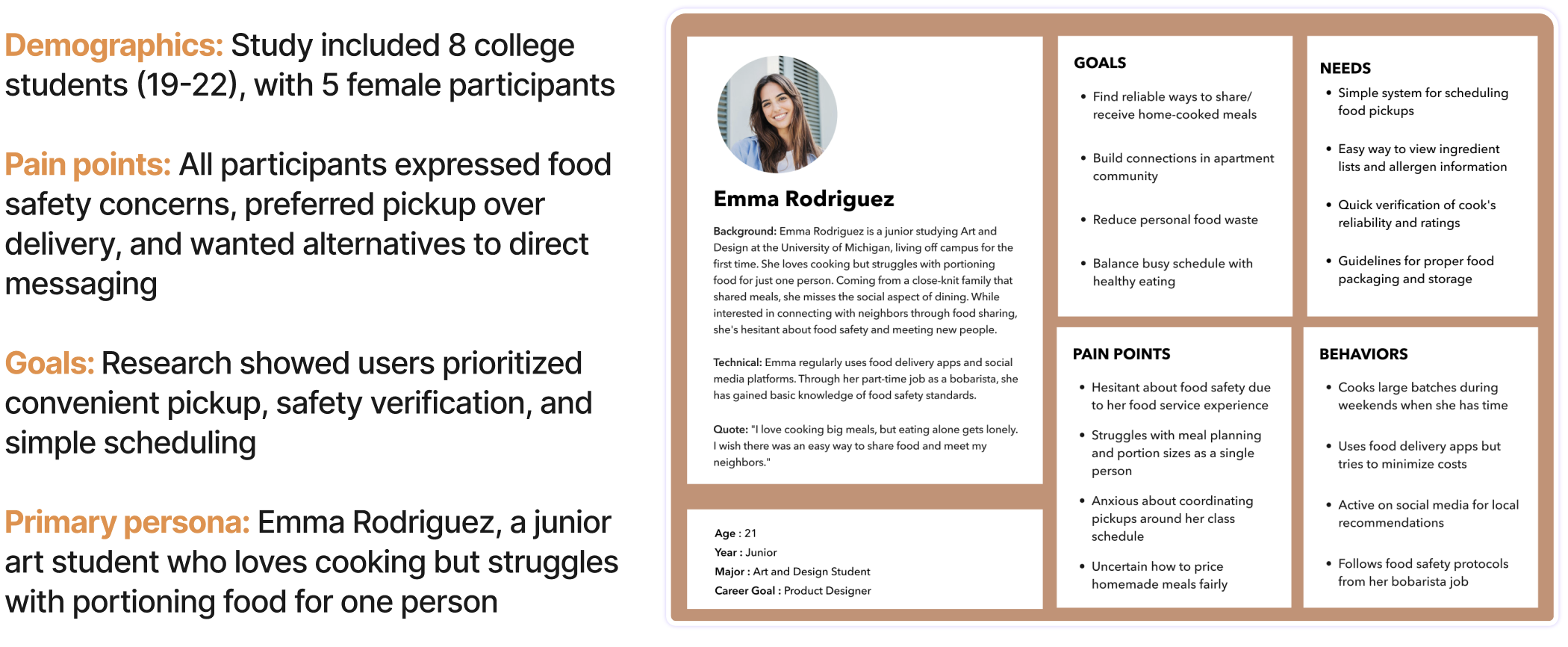
User persona created from research
Usability Goals
Trust, Communication, Satisfaction.
Help users safely share and receive food with clear safety checks and verification.
Make the app easy to use, with simple food sharing ratings and guidelines.
Build trust between neighbors through transparent user profiles and ratings.
Ideating / Sketching
Concept exploration through crazy 8 sketches and iterative wireframing.
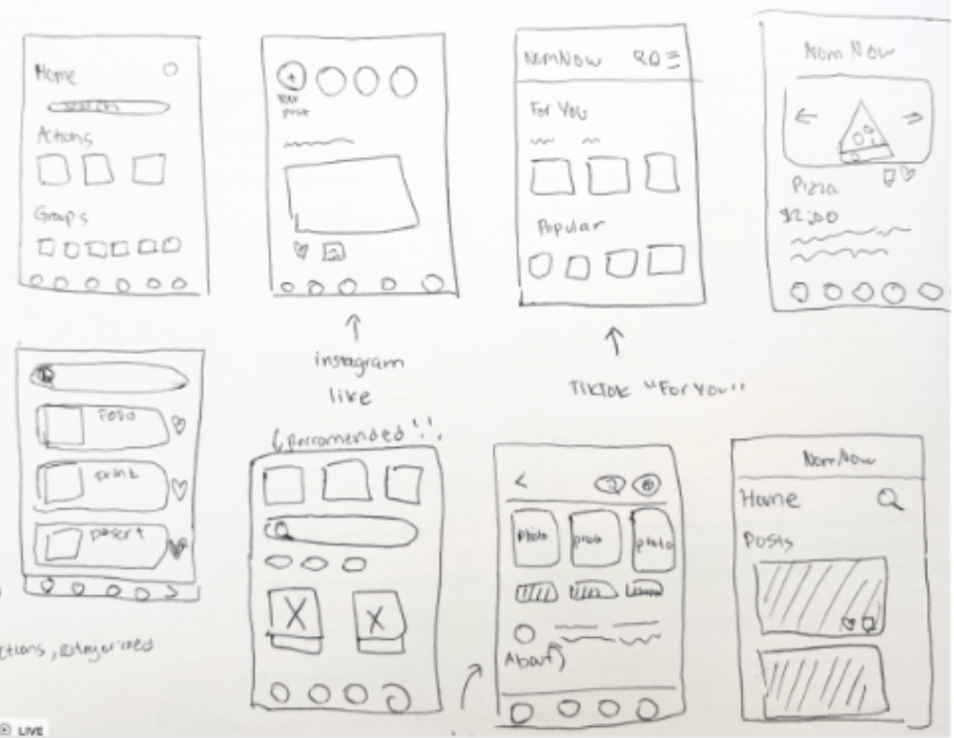
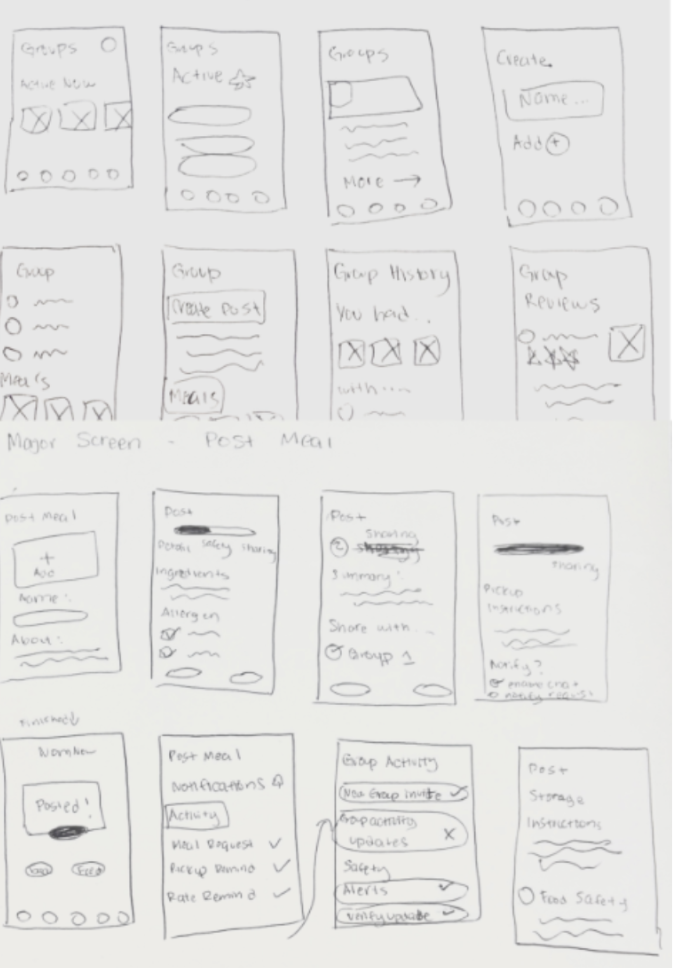
I started with crazy 8 sketches to quickly explore different interface approaches and user flows. These rapid sketches helped me visualize various solutions for meal discovery layouts, posting flows, safety verification systems, and pickup coordination methods. The sketching process revealed multiple ways to approach core challenges like building trust between strangers, simplifying food posting, and making location-based discovery intuitive.
From these initial explorations, I developed low to mid fidelity wireframes that tested different navigation patterns, information hierarchies, and user flow sequences. This iterative sketching process was crucial for identifying potential usability issues early and exploring creative solutions before committing to high-fidelity designs.
Wireframes / Design Process
Iterative design refinement based on user feedback and usability testing.
Initial Design Challenges:
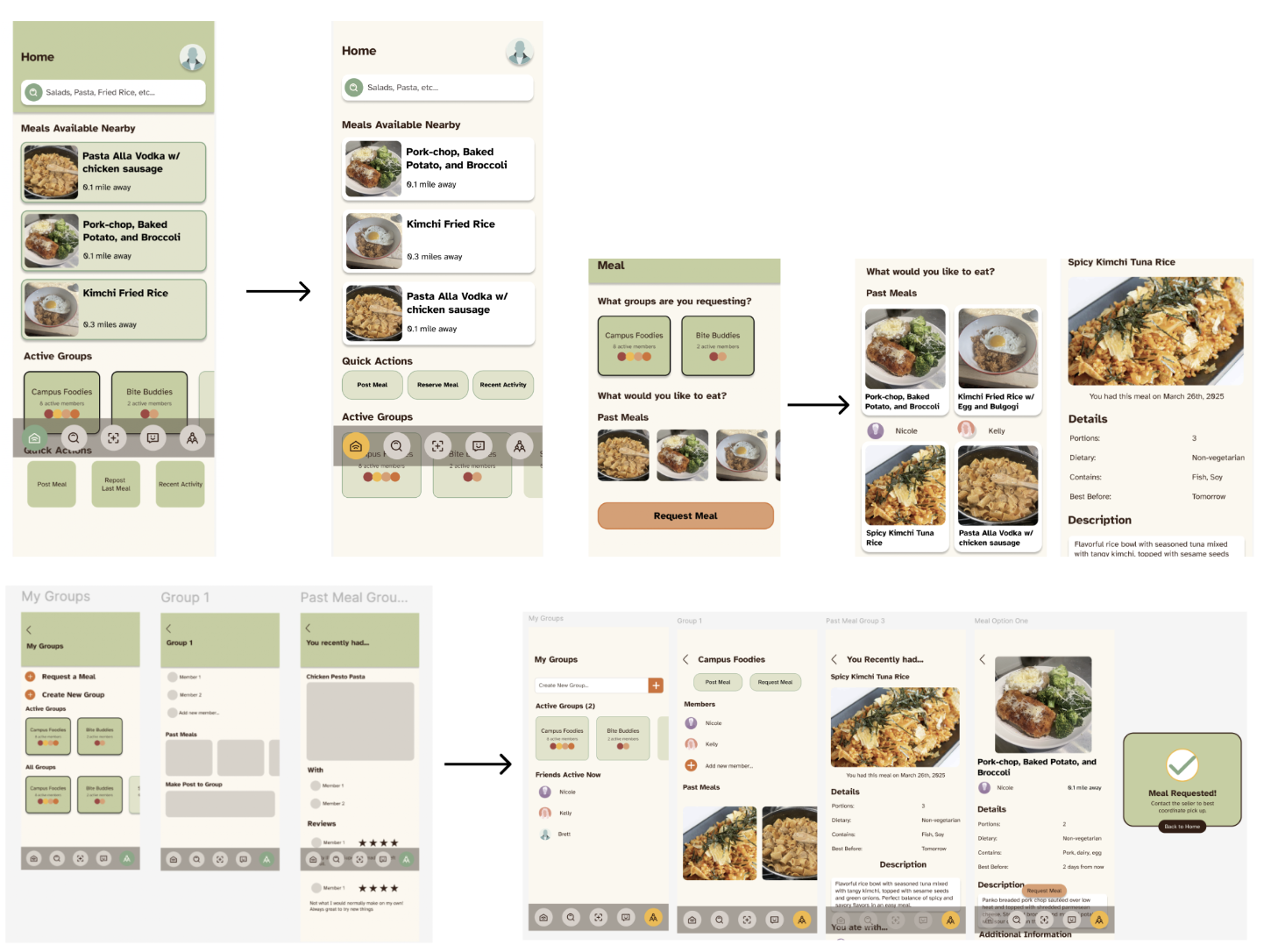
Home page had a confusing mix of colors and functions that created cognitive overload
Groups functionality felt unfinished and unclear, lacking proper user feedback
Navigation felt clunky and didn't surface the most important information first
Design Evolution:
Steamlined home page to prioritize meal discovery as the primary user goal
Redesigned groups with clearer purpose and better information architecture
Simplified navigation with bottom bar access to core functions
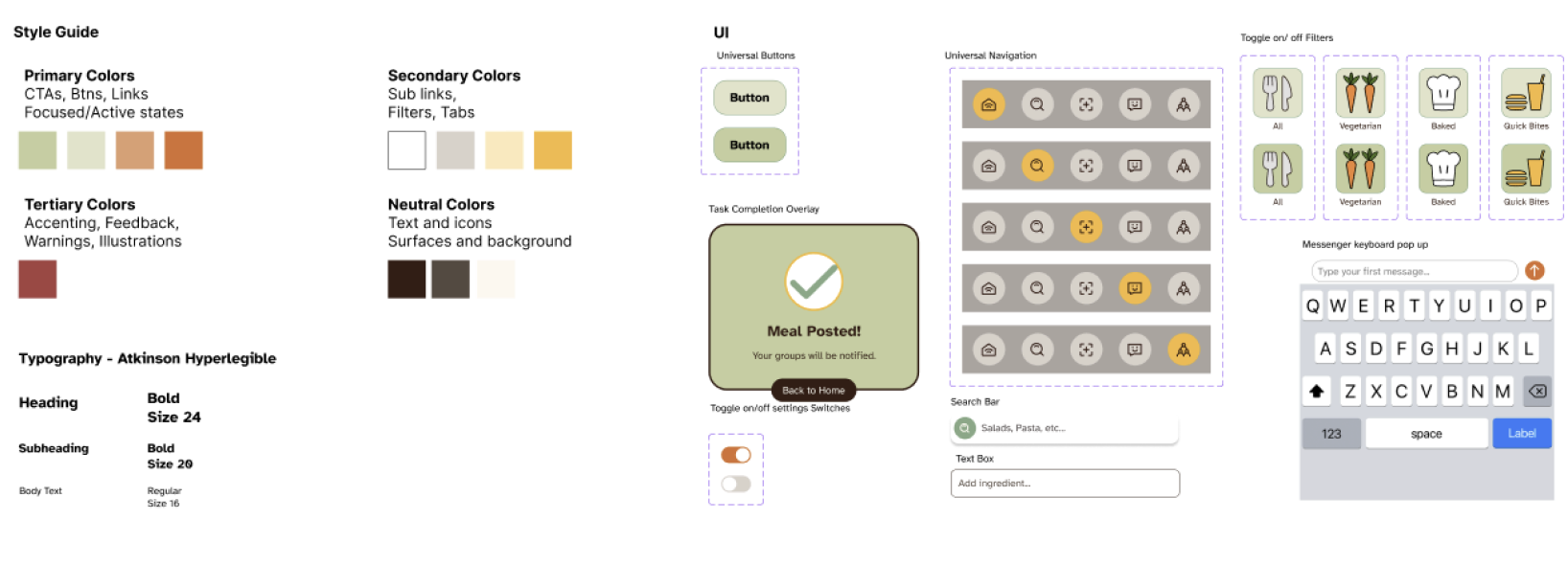
Consistent visual hierarchy using orange for primary actions and green for safety/freshness
Enhanced safety indicators throughout the user flow
Featured Design Screens
Clean, safety-focused interface that builds trust while enabling convenient food sharing.
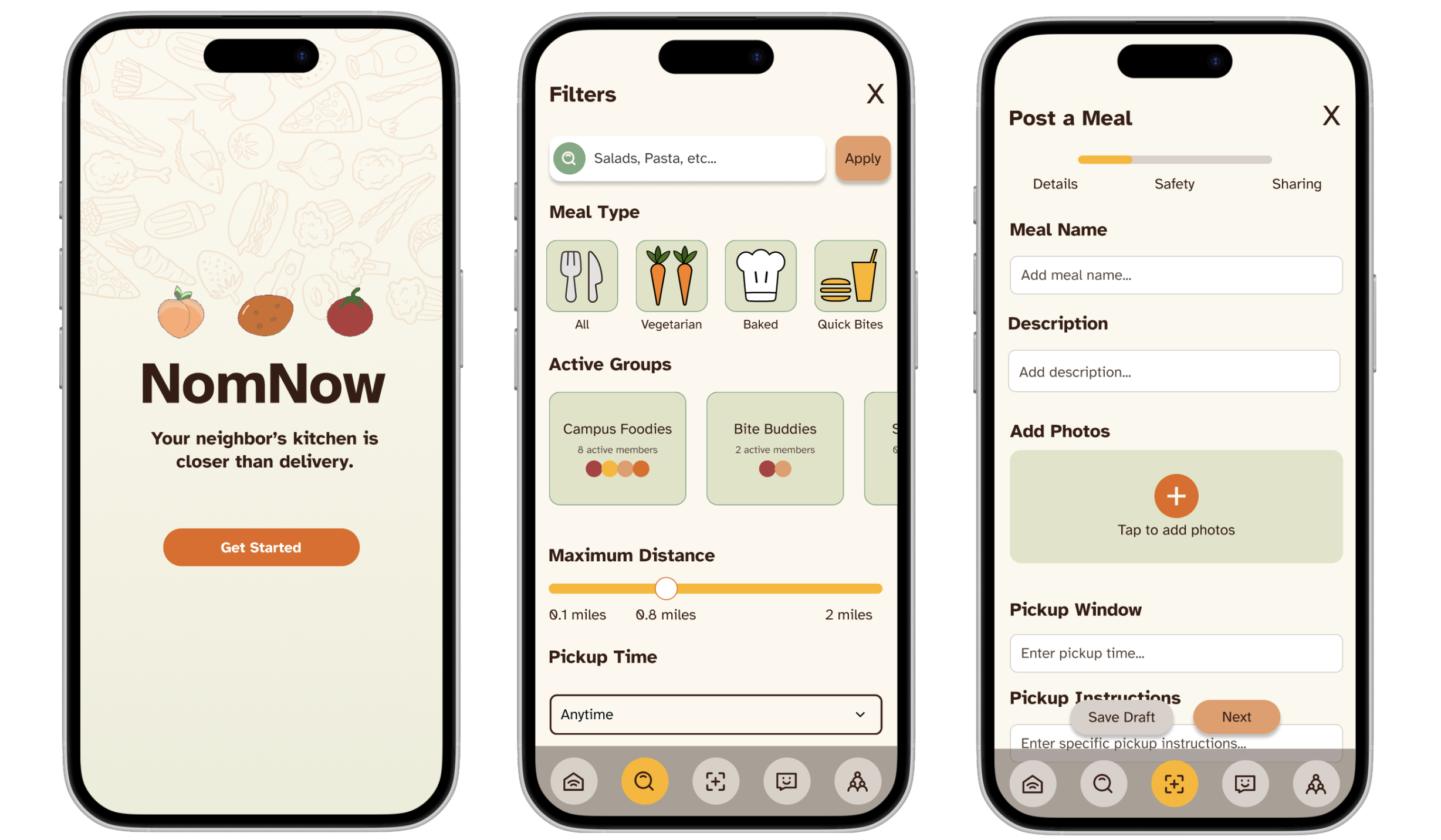
Quick Onboarding
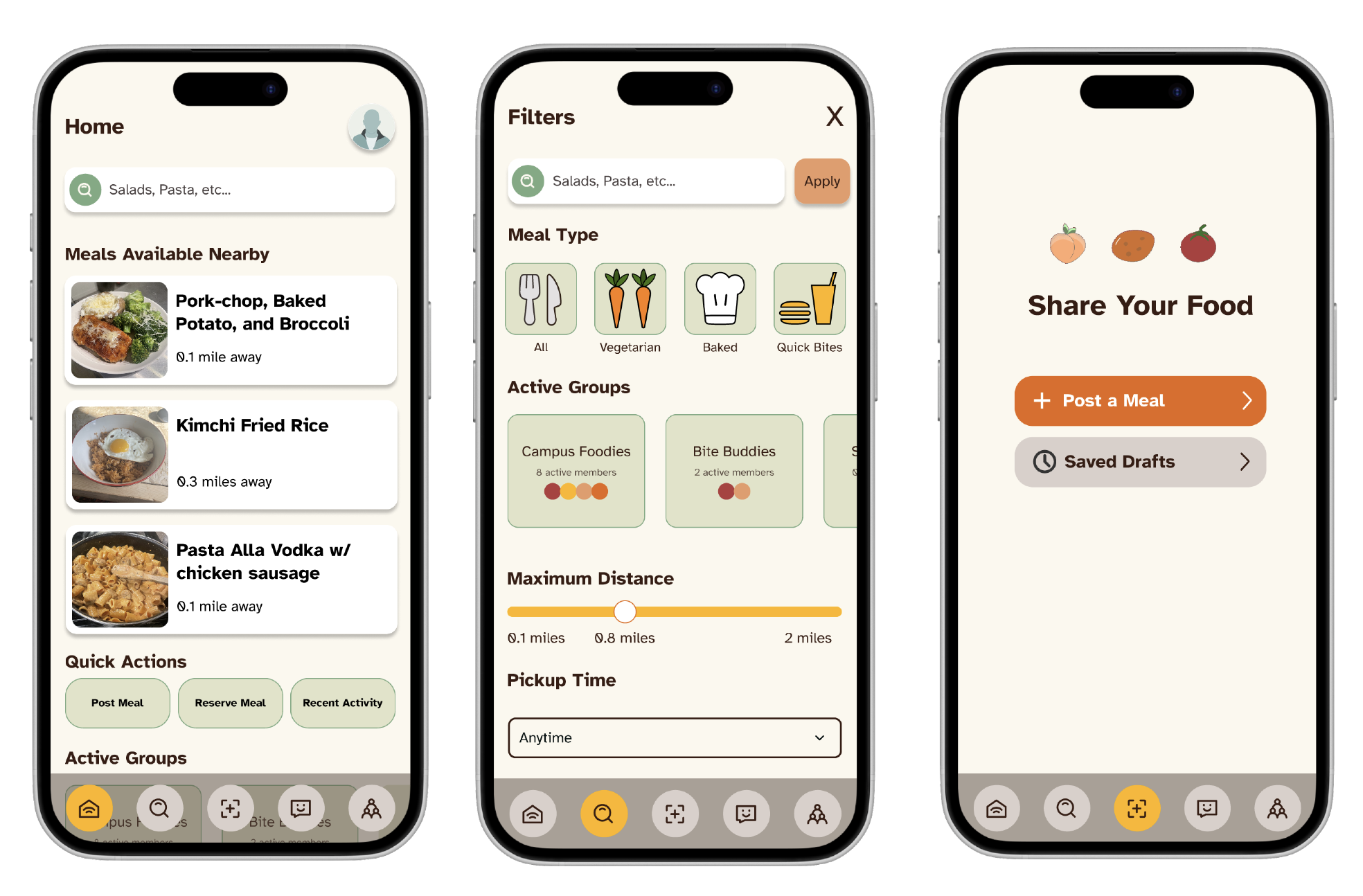
Home, Search/Filtering, Post.
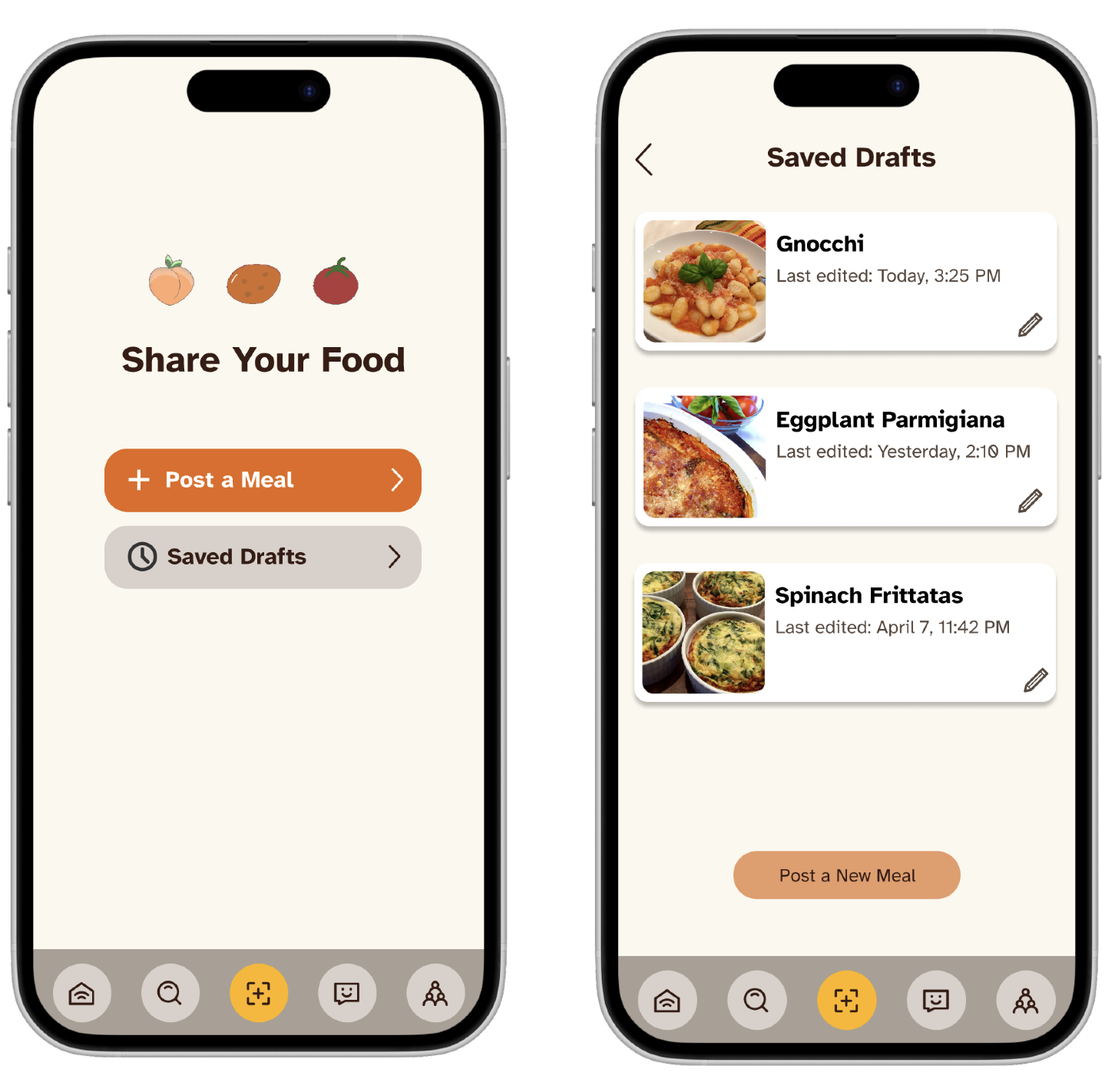
Posting, Drafts: Share meals with saved draft functionality. Multi-step posting flow with safety, sharing, and notification preferences
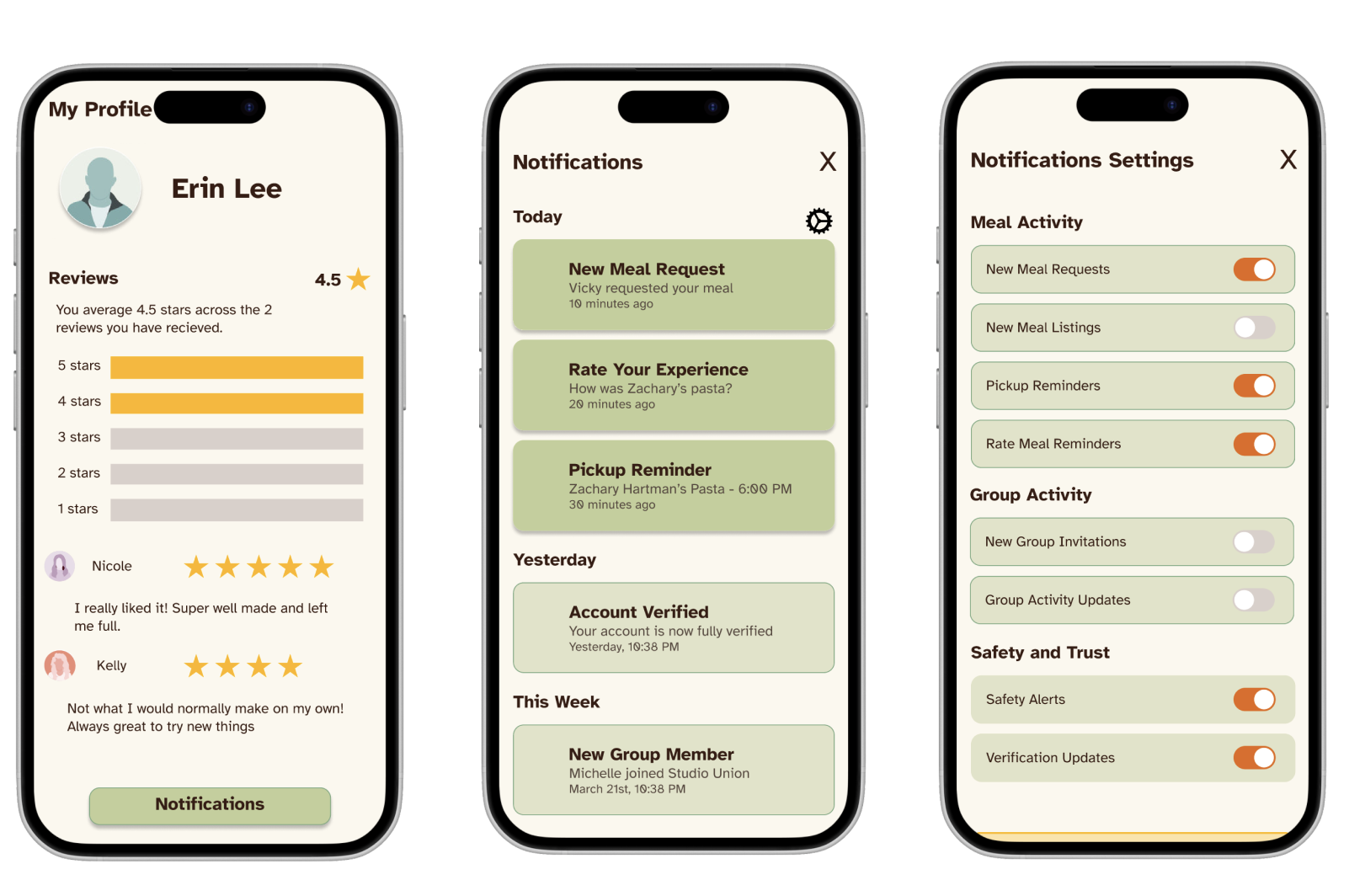
Profile, Notifications System: Meal requests, pickup reminders, and safety alerts. Prominent user ratings, verification badges, and review systems
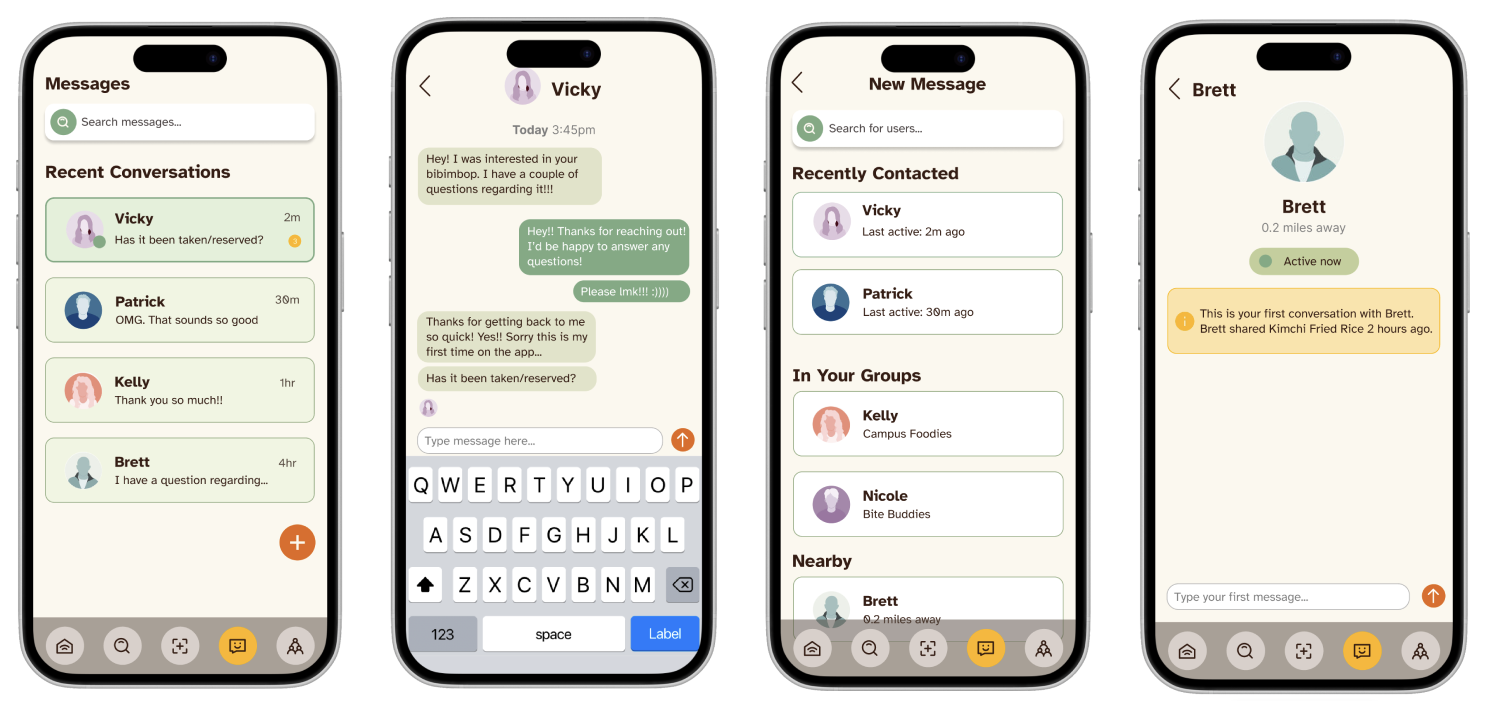
Messaging: Real time chat for meal coordination, recent conversations, group contacts, and nearby users.
Future Development
Expanding reach and improving user experience.
Map integration for visual location discovery
Enhanced safety features including background verification options
Expanded dietary filtering and allergen management tools